

 Türkçe
FOB delivery method is a term frequently used during export and import transactions. However, most of those who hear this term wonder what FOB is and what FOB delivery method means. In this article, you can find all the details about the FOB delivery method.
FOB delivery method is a term used within the framework of international trade rules determined by Incoterms. This term refers to the seller’s responsibility to deliver the goods to the buyer at a specific port or loading point.
If you want to learn more about FOB delivery method, continue reading our article. In this article, you can find what is FOB, how to determine FOB delivery method and all other details about FOB delivery method. So, what is the FOB delivery method? Read the details to continue!
WHAT IS THE FOB DELIVERY METHOD?
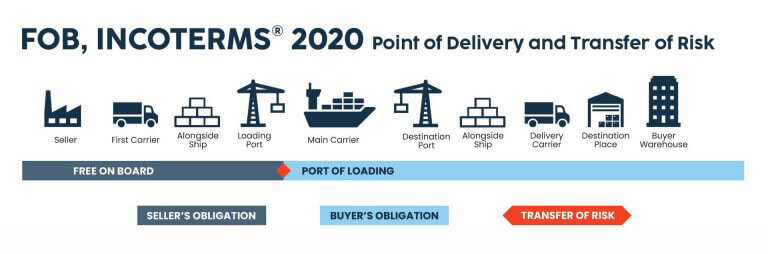
FOB is a trade term that is short for “Free on Board”. Those wondering what FOB means should know that it has an important place in the supply chain. This term indicates a point that defines the responsibilities of the buyer and seller. It refers to the point at which the responsibility for the transported goods passes from the seller to the buyer. This point can often be the loading dock or the seller’s warehouse. In FOB delivery, the seller is obliged to undertake the transportation of the goods to the specified point. However, the goods become the responsibility of the buyer from this point on. Therefore, correctly defining the FOB delivery method within the supply chain is very important for the smooth maintenance of commercial relations.
WHAT IS FOB?
FOB is the abbreviation of the English expression “Free On Board”. This term, which is frequently used in trade, means that the transportation costs of the goods are paid by the seller and the transportation of the goods to a certain point is carried out by the seller. FOB is an important term used in export and import transactions and regulates transportation and delivery processes in international trade.
WHAT IS FOB PRICING?
FOB (Free on Board) pricing is a trading term in which the seller assumes the costs and shipping of the goods. Under this term, the seller covers the costs of placing the goods on the transport vessel, port fees, insurance and unloading. In this case, the buyer only needs to deal with the transportation of the goods from the destination port to the final destination and other related costs. FOB prices are determined at the port of destination, where the goods become the responsibility of the buyer. With this method, the seller is relieved of liability and transfers the costs to the buyer after the goods are safely transported and unloaded.
THINGS TO KNOW ABOUT FOB DELIVERY METHOD
In order to minimize the problems experienced in maritime transportation, many changes were made to the FOB Delivery Method with the regulation made in 2010. With this regulation, the responsibilities transferred to CIF, which is the most used delivery method in the export field after FOB, offers the opportunity to solve the problems between the two parties in a short time. In this regulation, the responsibilities between the exporter and importer are clearly stated. For this reason, it is very important for companies engaged in maritime transportation to have information about what there is to know on this subject. Thanks to the regulation regarding the FOB Delivery Method, any problems experienced between the parties can be resolved in a short time. With this regulation, the problems experienced between the importer and exporter are minimized, while the negative effects that may occur during transportation are also minimized.